
Leading Myself - Personal Power
Semester 1
Leading yourself
This AMU course is offered in collaboration with Edutasia and has been developed and designed by
Asnæs & Vangstrup.

Preparation for Semester 1
Please review the Semester 1 webpage carefully.
This page also includes buddy group exercises to be made during your buddy groups sessions. These exercises are therefore not part of your individual preparation for the semester.
For semester 1 please also study your DISC profile and the 180-degree survey results.

What, why, how?
What is leading myself?
It’s a mindset. Therefore, we start this course by looking at the differences between a fixed and a growth mindset. Being aware of your mindset—and recognizing when you are challenged to stay in a growth mindset—is the first step to leading yourself.
Furthermore, by becoming aware of your behavioral patterns and communication style, you improve your ability to contribute positively to relationships with others and yourself. You can lead yourself with confidence when you become aware of—and understand—your strengths and weaknesses.
Therefore, this semester will include:
Understanding the difference between growth and fixed mindset
Understanding the concept of “Everything DiSC Nordic” profile and analyzing your own behavior
An exploration of your 180-degree survey to identify gaps between your intentions and self-perception to how others perceive you
Why is it relevant?
Becoming aware of your specific patterns in communication and self-perception is key to leading yourself.
How do I practise it?
With a growth mindset, you begin to identify the gaps that challenge you in your relationships with others and yourself. Awareness is the first step in developing new internal patterns. You will be challenged to try out new forms of communication and notice the difference between communicating with awareness and communicating without it.
We start by understanding our mindset & behaviour
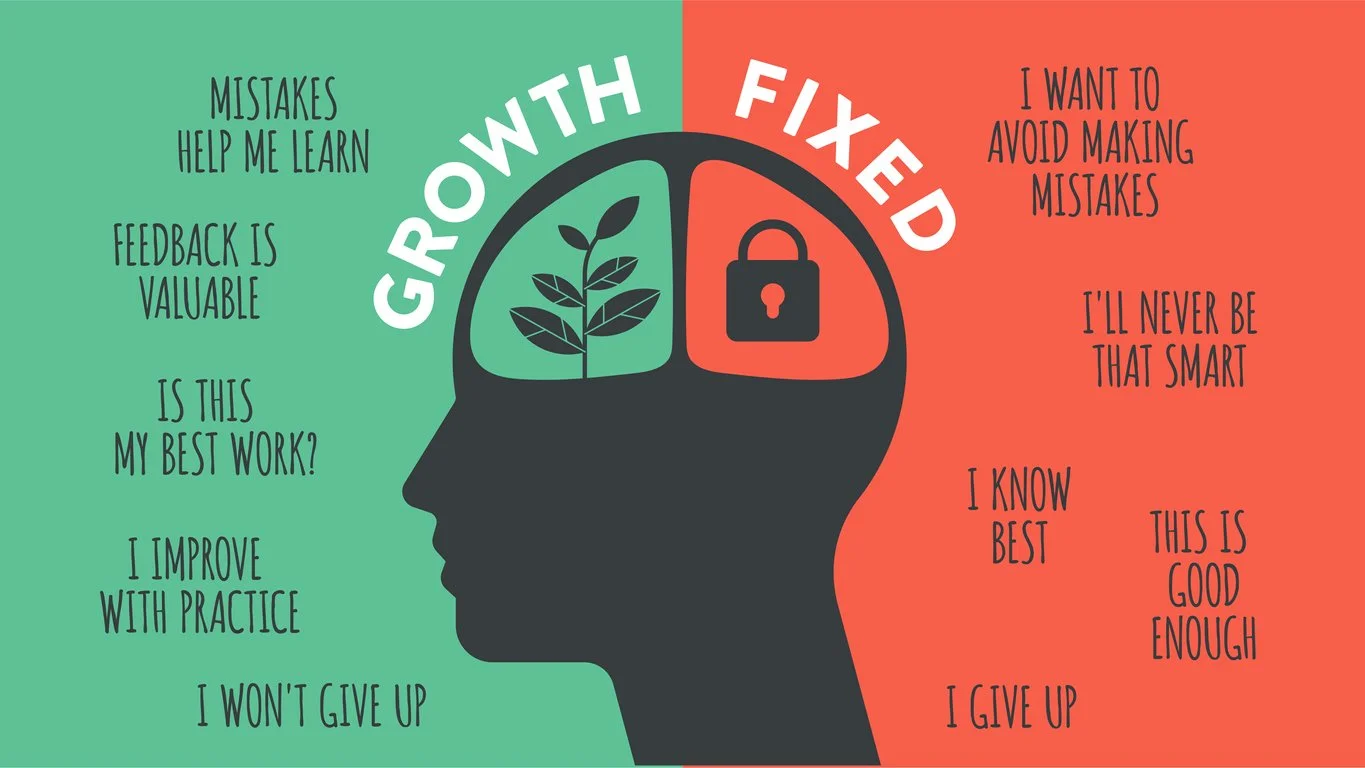
A growth mindset is the belief that abilities and intelligence can be developed through effort, learning, and persistence. It fosters resilience and a willingness to embrace challenges.
In contrast, a fixed mindset assumes that talents and intelligence are innate and unchangeable traits. This can lead to a fear of failure and a tendency to avoid challenges.
The concept was developed by psychologist Carol Dweck.
Watch the video and learn more about your mindset
Reflections to share in buddy group:
When do you experience having a fixed mindset?
When feeling fixed in your mindset, what can help you change to growth mindset?
Feedback & mindset
In essence, feedback helps expand your self-awareness—just as providing others with constructive feedback on what you observe can support them in becoming an even better version of themselves.
In her book Mindset: The New Psychology of Success, Carol Dweck explains how people with a fixed mindset believe that their qualities are set in stone. According to Dweck, this often leads to a tendency to avoid challenges, give up easily, perceive effort as futile, and feel threatened by the success of others.
In contrast, individuals with a growth mindset believe that their basic qualities can be developed through effort and learning. As a result, they tend to embrace challenges, persist in the face of setbacks, view effort as the path to mastery, and learn from the success of others.
We will digg into feedback on semester 3.

Source: Carol Dweck
Everything DISC / DISC Nordic
What caracterises your behaviour?
Behavior
We all possess what is necessary for us to thrive and grow in our work life. One of the most crucial contributions to this is the awareness of our own and others' strengths. Research shows that identifying and focusing on our strengths can enhance both engagement, well-being, and joy—both for ourselves and others.
It’s also important to recognize that our strengths can become overwhelming. Others might feel irritated, react unexpectedly, or the energy might dissipate in the room. This often happens when interacting with someone who has a different behavior from what we prefer and find natural.
You might know peolpe who says, "That's just how I am..." when pointed out behviour you do not agree upon.
That approach isn’t constructive. We need to actively work on using our strengths appropriately and become aware of our development areas in relation to behaviors that might drain others' energy.
With awareness of our own behavior, we can:
Better Identify and Utilize Our Strengths: Understand how to make the most of what we’re good at.
Increase Tolerance for Others' Strengths: Develop a broader acceptance of different strengths and styles.
Learn to Communicate Differently with Different People: Adapt our communication style to fit various individuals.
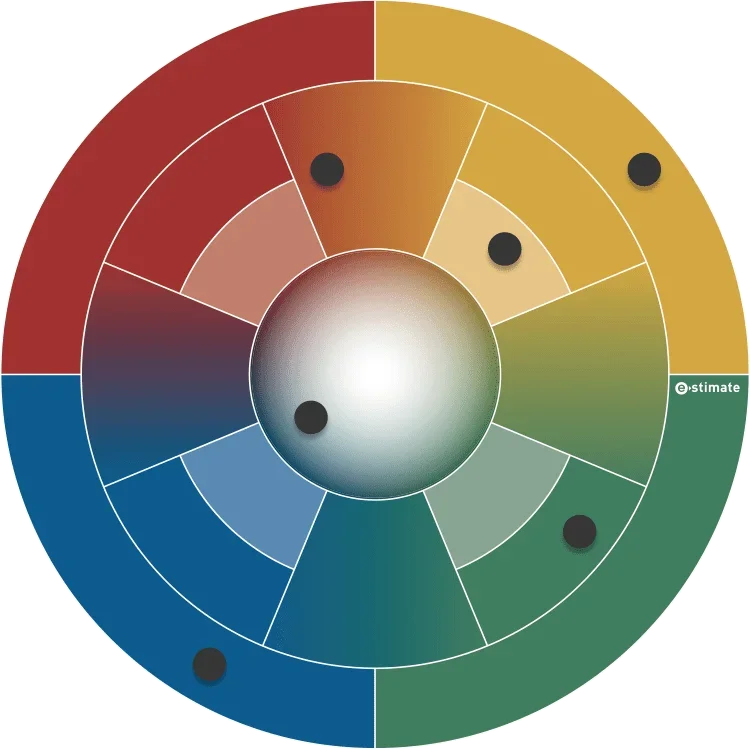
The 4 Archetypes Defined:
Dominance - The GREEN Profile: Focuses on results and achievements, often seen as assertive and driven.
Influence - The RED Profile: Emphasizes creativity and innovation, known for being enthusiastic and inspiring.
Concientiousness - The YELLOW Profile: Values organization and accuracy, characterized by being methodical and detail-oriented.
Steadniness - The BLUE Profile: Prioritizes harmony and support, recognized for being patient and team-oriented.
The 4 Archetypes in DISC
In this context, we refer to four different archetypes. We all exhibit traits of each, but we often have a primary profile that we recognize, especially in challenging situations.
When interacting with others, situations often reveal that we experience things differently. We react in various ways and therefore often end up in different places.
By becoming aware of our own and others' behavior, we can use effective communication tools to clearly express what we want, ask questions more easily, set boundaries, and handle criticism constructively.
The better you are at being aware of your own and others' behavior, and mastering assertive communication, the more impact you will have among your peers, colleagues, and employees.
This means you’ll find it easier to be heard and understood, and others will trust you more. It also reduces disagreements because you tend to ask curious questions rather than judge others.
THE RED PROFILE
Is adventurous and courageous
Outgoing and full of energy
Ideas can flow so freely that it can be overwhelming
Not afraid to take risks or seize opportunities
A colorful person with expressive, descriptive language
Enjoys the freedom to create
The major weakness is unpredictability. Because he/she often thinks quickly and changes his/her mind just as fast. He/she can be too far ahead of everyone else.
THE BLUE PROFILE:
Caring and helpful
Friendly and well-liked by others
A good listener
Sensitive to others' feelings
Not afraid to help others
Collaborative
Loyal
The major weakness is that the person is easily led astray because of a trusting nature and not thinking ill of others. They may also be low-energy and hide it behind a facade of false friendliness.
THE YELLOW PROFILE:
Detail-oriented
Logical and reasonable
Persistent and often strong-willed
Plans and executes
Values routines, rituals, and procedures
Fearful of making mistakes
Very interested in facts
The major weakness can be a lack of courage—fear of making mistakes. They want to have control over everything and may believe in their own infallibility.
THE GREEN PROFILE:
Ambitious and Performance-Oriented
Goal-focused
Leads the way
Prefers to lead alone
Seeks full control
Excludes those who don’t fit
Quick to reward and punish
The major weakness may be that they want to do everything by themselves and therefore has difficulty trusting others. They may also struggle to accept others' methods.
Buddy group exercise: Share your DISC profile and discuss:
How can you relate to the DISC profile and the behavoural characteristics?
How can you relate to the strenghst and weaknesses of the profile?
Interesting blogs from organizations using DISC
Till next time:
24th June, 9 - 11 am, online
Meet with buddy group to discuss:
Reflections on your DISC profile: can you relate to the caracteristics?
Share your 180-degree survey and the gaps you have identified
How has your collegues responses surprised you?
How have you prioritized your gap action plan and why?
Finish the gap action plan