POSITIVE PSYCOLOGY
&
EMOTIONEL INTELLIGENCE
POSITIVE PSYCOLOGY
.
In short, positive psychology can be defined as the
“science of well-being and optimal human function” –
i.e. 1) when we feel good and 2) we are doing well.
The term positive psychology is used daily as an umbrella term for a wide range of research areas within psychology. What the research areas have in common is that they investigate the meaningful, forward-looking, potential and resource-oriented aspects of the human psyche. Roughly speaking, they investigate the conditions that make life worth living – such as success and love, etc.
The focus is on “what is right with people” and how we can promote it, in contrast to much traditional psychology, which focuses on “what is wrong” and how we can treat it.
The term positive psychology should not be understood to mean that the rest of psychology is perceived as negative psychology. Psychoanalysis also does not imply that all other psychology is physioanalysis. Humanistic psychology does not imply that all other psychology is inhuman, and cognitive psychology does not imply that all other psychology is emotional psychology.
Instead, within positive psychology, we talk about traditional psychology, which since World War II has had a predominantly disease-oriented research focus. The table below shows some of the differences in research subjects between traditional psychology and positive psychology.
Positive psychology can be interpreted in part as old wine in new bottles. The field today covers research areas that have existed for a long time, but which have not received significant research funding for many years. Some of the theoretical ideas within the field have been put forward previously, and are in that sense old wine.
What is new is in particular the many empirical studies and partly new theories and methods. In recent years, positive psychology has become known to the public in particular due to happiness research, which actually only constitutes a small part of the subject area of positive psychology. Research in positive psychology was originally divided into three areas:
1. Positive emotions – understood as short-term states.
2. Engagement – understood as long-term traits such as personality traits and character strengths.
3. Meaning – with a focus on meaning experienced through participation in positive communities (positive institutions).
The American psychologist Martin Seligman (2011), who is considered the founder of positive psychology, has since added two categories:
4. Relationships – understood as positive relationships with other people.
5. Achievement / accomplishment.
A myriad of research objects fall under these broad categories. The research is based on
traditional research methods, which are also used today on “the sunny side of life”.
The goal of research in positive psychology is not to eliminate the negative, but rather to supplement
traditional psychology with research into how positive relationships can be promoted so that people can
thrive and live fulfilling lives.
Previously, the concept of happiness was used as an overarching concept within positive psychology. Today, it has been replaced
by the concept of well-being, which can also be translated as well-being or well-being.
The combination of well-being and optimal functioning is called flourishing. In Danish, it can be described as to blossom, unfold, come into character, be in bloom, be prosperous, succeed, and realize oneself. Most researchers in the field try to work descriptively rather than prescriptively. That is, they do not preach that you should think positively about your work or ignore negative emotions. The researchers simply produce a lot of information that you yourself can choose what you can and will use for
EMOTIONEL INTELLIGENCE
Studies indicate that emotional intelligence can be considered an integral component of positive psychology, with higher EQ predicting greater life satisfaction, optimism, and overall well-being
Be aware of your behavior and your colleagues' reactions. One of the most important things for good cooperation is an equal relationship, which also implies an equal approach to each other as colleagues. This means, among other things, that you should neither become aggressive towards each other, be passive aggressive with small suppositories, nor be submissive by simply withdrawing from the conflict.
Aggression can arise if a colleague disagrees with a statement and “attacks” you or someone else at work. It is not about physical aggression, but about the way in which you approach each other.
A good rule for assessing whether you have been aggressive is to approach the other person and ask:
“I’m okay – but are you okay?”
Avoid prejudging; instead, practice asking questions with curiosity so that you can gain a better shared understanding of the situation.
Ask questions like:
What makes you say what you do?
What do you feel I haven't paid attention to?
If I were to do something differently, what would it be? Can you help me by sharing your thoughts?
When we manage to be equal, curious and understanding of our differences, we avoid conflicts and learn to be patient with each other. It is often in the difficult moments and conversations that we find constructive solutions that strengthen cooperation and relationships.
Remember to take responsibility for both the situation and the relationship!
Always stay in your own half of the field
Be understanding of differences, feelings and needs
Listen with empathy to the feelings of others
Be curious with open questions
Separate feelings from facts
Watch these videos about emotional intelligence at a workplace and how understanding emotional intelligence can add value to your work environment.
Daniel Goleman: Emotional Intelligence
Daniel Goleman, the inventor of the concept of emotional intelligence, explains what you can do to work with this intelligence and how it can be used in the workplace. Employees in the company observe your reactions daily, and these emotions become part of their consciousness.
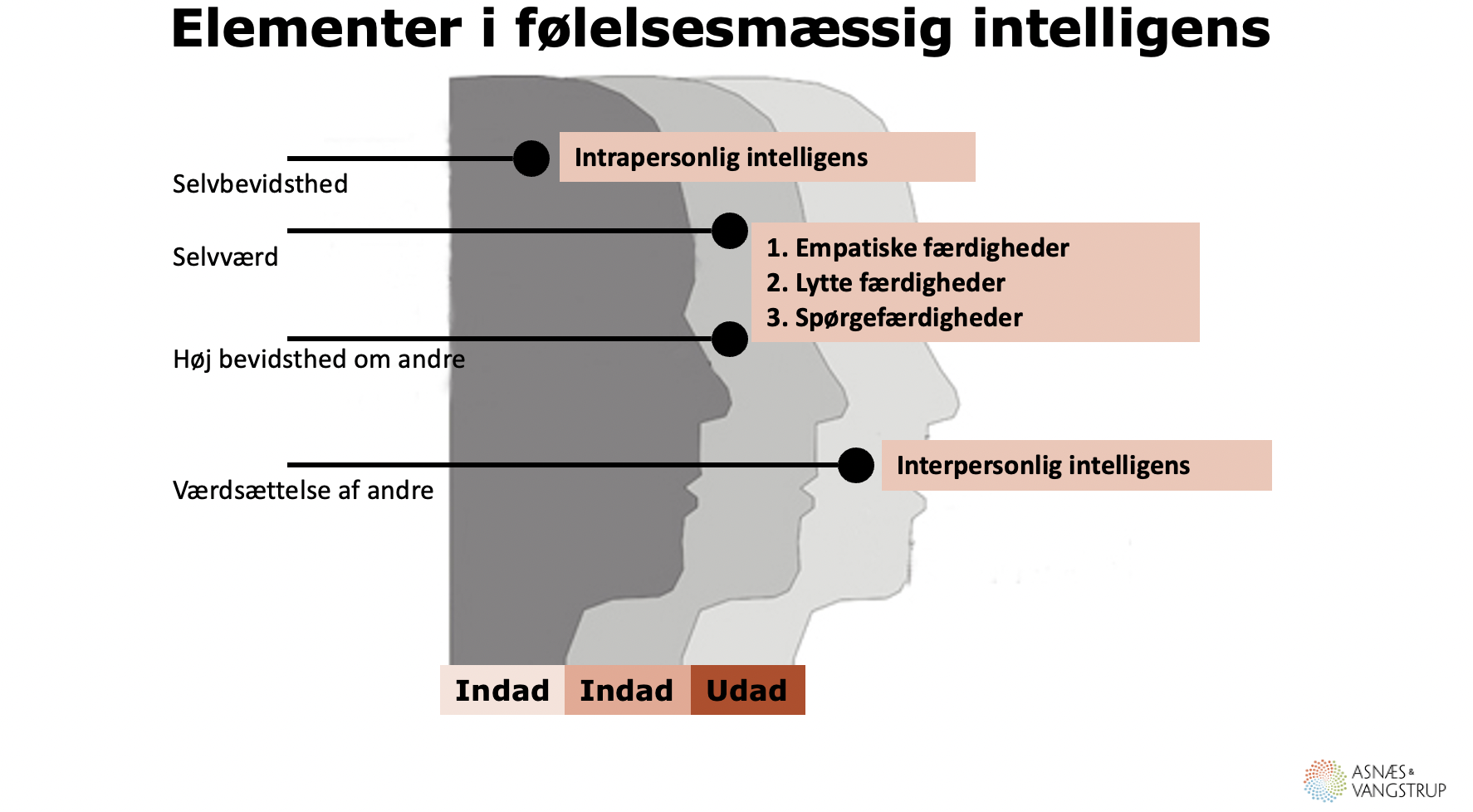
Emotional intelligence is about our ability to understand and manage both our own and other people's emotions.
Daniel Goleman identifies 5 different competences:
Self-awareness: The ability to understand your own feelings and moods. This also includes knowing your values, goals, and competencies, as well as knowing who you are.
Self-regulation: The ability to manage your emotions so that you can use them to your advantage rather than letting them become an adversary.
Motivation: The ability to set ambitious goals and focus on achieving them, even when adversity arises.
Empathy: The ability to understand the feelings and needs of others, often described as “putting yourself in someone else’s shoes.”
Social skills: A set of skills that help you relate to others effectively. This includes skills such as leadership, persuasion, and social intuition.
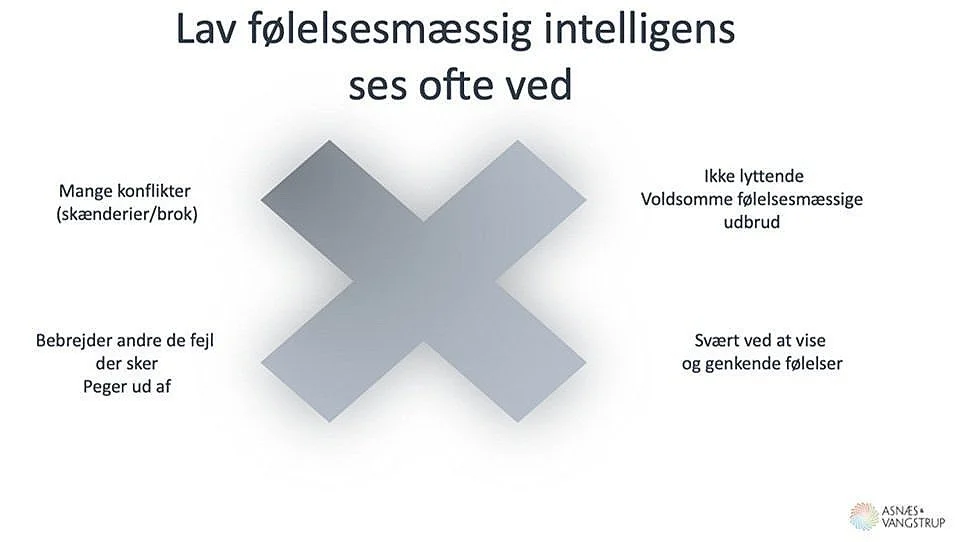
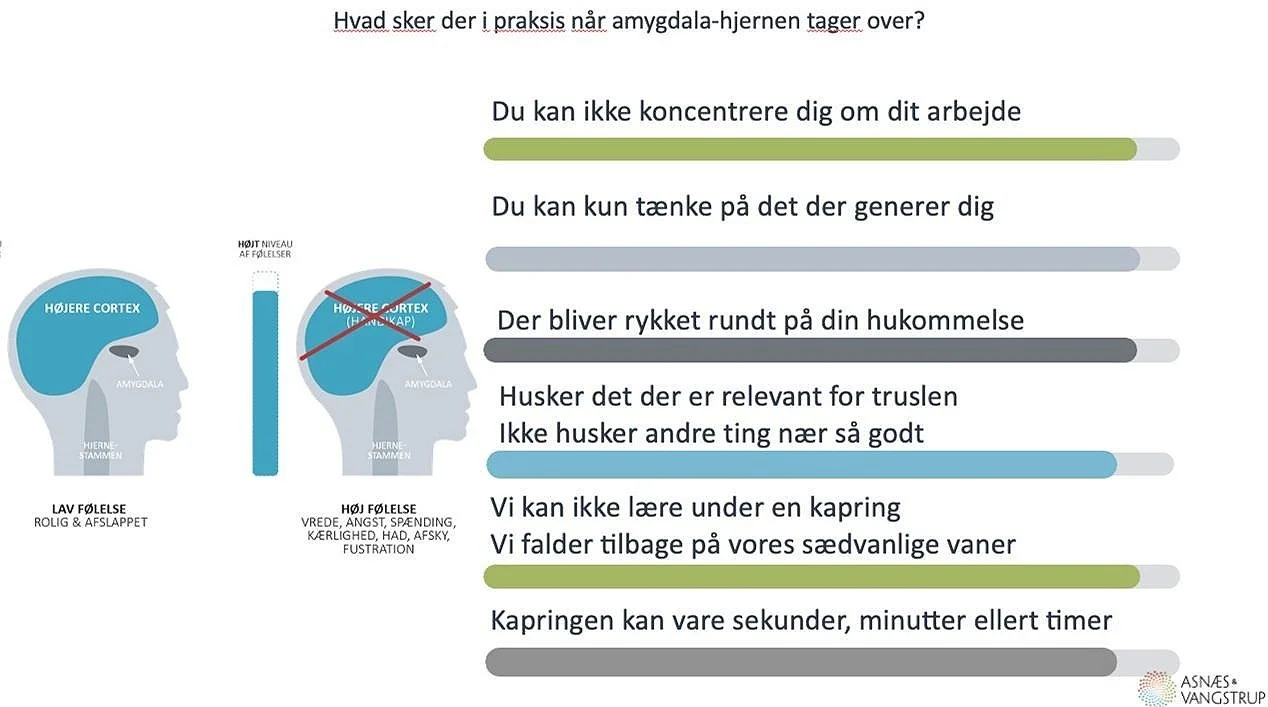
Excersise
Describe your experience of the situation without whining, bitterness, or condescending words. Express the feelings you are experiencing in a neutral way without exaggerating. Be specific about your needs, and be clear about what you want.
End with a polite request, and tell the other person how you see a possible solution.